Posts

Mavis Mtonga: Keeping beauty against all odds

Image
Email Mavis was injured in a car crash in 2013.    JACK ZIMBA “I BELIEVE I’m going to walk again,” says Mavis Mtonga, her beautiful face framed by a curly wig. Sitting and chatting with Mavis, it is easy to overlook her inability to stand or walk, which is all covered up by her beauty and personable character. The 28-year-old is also possessed with a strong zest for life, something which has kept her going since her world changed on August 1, 2013. Mavis was a 26-year-old fashion model when the vehicle driven by her father rolled three times after a tyre burst. The accident happened when the family was travelling to Zambia from Botswana where they live. It was the family’s tradition to travel back home once every year, usually during the Christmas holiday. Mavis was thrown out of the vehicle and broke a T10 vertebra, which is one of the 12 thoracic vertebrae in the spine. She is now paralysed from waist down and conf...

Kaote: A community that poisoned itself to avoid starvation

Image
Konzo victims .   JACK ZIMBA   AFTER a jolting drive down a winding sandy road, with tree branches whipping against our 4x4 vehicle, we finally arrive at Kaote village, about 60 kilometres south-east of Mongu, Western Province. Soon we are surrounded by poverty-stricken faces of men, women and children, who emerge from behind mud-and-straw houses. The scene gets even gloomier with the appearance of a small boy in a wheelchair, his feet hanging listless. Across the drab homestead, a young woman hobbles towards us, her body supported by crutches. Another boy follows in similar fashion. These are the victims of konzo, a paralysing condition caused by cyanide poisoning. Cyanide occurs naturally in cassava, and a monotonous diet of inadequately processed cassava damages the nervous system, causing permanent paralysis. For generations, cassava has been the staple food for people in this region, which has poor soils to support other crops such a...

Gruesome murder in Chienge

Image
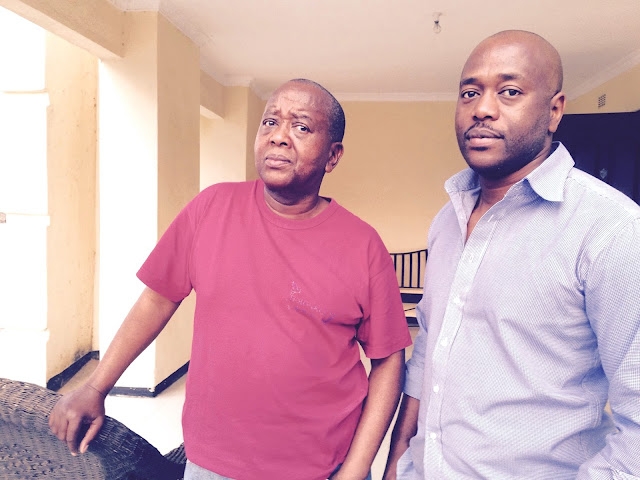
Mr Kabonda nursing his wounds. JACK ZIMBA   ON MONDAY, November 16, a group of men, acting on Senior Chief Puta’s orders, went to demolish a small palace belonging to a headwoman long accused of insurrection in the Bwile chiefdom. What followed, however, was a brutal and bloody revolt that left the chief’s retainer or kapaso dead.   From his ipad, Senior Chief Puta shows me pictures he took of his kapaso shortly after he was killed. The images, which are too graphic to publish, show the mangled and bloody face of Peter Muswe - his deep wounds a telltale of a savage and merciless attack. "He was a good man," says the chief, his voice almost breaking. Muswe’s family is shocked at the killing. "My brother was killed like an animal," says Mwenya Muswe, younger brother of the slain royal messenger. And at the district hospital, 60-year-old Gershom Kabonda, another victim of the brutal assault, groans with pain on his hospital bed. He is surr...

2 can share a kidney

Image
Gabriel with his younger brother, who donated a kidney to him.   JACK ZIMBA        WHEN Gabriel Phiri was diagnosed with kidney failure in 2006, he felt like it was the end of the world for him. “It was a fright. It was a question of am I going to live or maybe this is the end of it all,” says the 55-year-old. Today, however, Mr Phiri lives a fairly healthy life, thanks to a donated kidney he received from his younger brother. Mr Phiri discovered that both his kidneys had collapsed after a freaky incident. While waiting for a friend in a car park, a tiny particle entered his eye and he ended up at the hospital to have it removed. However, after routine tests, it was discovered that Mr Phiri had high blood pressure, a shocking diagnosis, as he was not a known hypertensive. Prior to this episode, however, Mr Phiri had for a long time suffered loss of appetite, which he could not understand. But it was the second diagnosis that scared ...

Recycle-mad Sweden now moves towards circular economy

Image
Solar panels at an apartment block in Husby.     Henrik Norlin explains to journalists how old clothes are turned into new fabric.   Bicycles at a new residential in the Stockholm Royal Seaport .   THE 1985 sci-fi movie, Back to the Future, predicted what the future would look like 30 years later - with flying cars, video phones, robots, self-lacing shoes and levitating skate boards. Most ideas remain a dream. The movie is partly set to the date October 21, 2015 which, three decades ago, seemed a really distant future. Yet on this very date, I found myself standing in a small science laboratory at the Royal Institute of Technology in Stockholm, Sweden, listening to a lively young man explaining how his small company called Re:newcell is able to turn old clothes into snow-white fluffy cotton that can then be used to make brand new garments. The concept seems extremely futuristic and I can imagine what such an innovation ...

Something fishy out there

Image
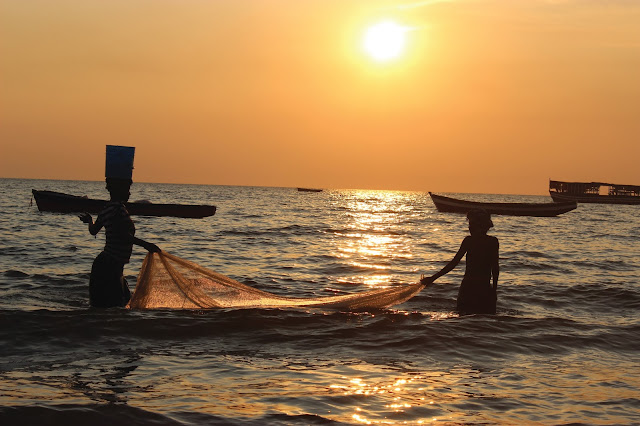
    TWO girls fishing using a mosquito net on Lake Mweru. Picture by Jack Zimba   JACK ZIMBA   IT’S Friday 05:30 hours and our small fishing party pushes the boat into Lake Bangweulu in Luapula Province. Leading the party is Bernard Chipulu, a third-generation fisherman who has been plying his trade on this huge expanse of water since he was a boy. He and his three nephews then peddle the banana boat into the deep waters of the lake. My fear of the lake and the dangers lurking beneath it – real or imaginary - are confirmed by Mr Chipulu, who tells me his net was broken by crocodiles a few days ago. Mr Chipulu and his nephews were going to check on 4,400 metres of netting they cast into the lake the previous day. There is a sense of optimism about today’s catch. One of Mr Chipulu’s nephews reported sighting a school of tiger fish around the area where the fishermen cast their nets. After peddling for about an hour, we finally reach the nets. By...